
THE IDENTIFIER | WORK PRO
EXPERIENTIAL DESIGN
STRENGTHS
Approachability
Experiential Design
Ability to Be Approachable
Your ability to be approachable ensures that others feel comfortable seeking your support, sharing ideas, and expressing concerns. This strength allows you to build open and trusting relationships, fostering a positive and inclusive environment. Approachability involves being open, friendly, and non-judgmental, enabling you to connect with people from all walks of life.
This ability enhances your capacity to resolve conflicts, encourage collaboration, and promote open communication. Your proficiency in approachability helps create an atmosphere where individuals feel valued and heard. Ultimately, your ability to be approachable empowers you to make meaningful connections and drive positive interactions in various contexts, from personal relationships to professional teamwork and leadership roles.
Key Skills That Pertain to Approachability:
Active Listening: Paying attention to others without interrupting, showing genuine interest in what they have to say.
Non-Judgmental Attitude: Creating a safe space for others by not passing judgment or criticism.
Open Body Language: Using eye contact, smiles, and relaxed posture to signal openness and friendliness.
Inviting Communication: Encouraging others to share their ideas, concerns, or feedback freely.
Emotional Intelligence: Recognizing and responding appropriately to the emotions of others, fostering connection.
Positive Attitude: Maintaining an optimistic and approachable demeanor that makes others feel welcome.
Respect for Diversity: Valuing and being open to different perspectives, backgrounds, and opinions.
Conflict Mediation: Using your approachable nature to mediate disagreements and find mutually beneficial solutions.
Supportive Feedback: Offering constructive feedback in a way that encourages growth without making others feel criticized or defensive.
Inclusivity: Making everyone feel welcome, valued, and included in discussions and decision-making processes.
Five Levels of Competency in Being Approachable
Level 1: Natural
What You Can Do: You have a natural ability to be friendly and open, making others feel comfortable in casual interactions. People may naturally gravitate toward you for light-hearted conversations or small requests, but you may not yet actively encourage deeper engagement or tackle challenging conversations. Your approachability is reactive, mostly limited to situations where others take the initiative to reach out to you.
Skills at This Level:
Being friendly and open in casual interactions.
Creating a comfortable space for light-hearted discussions.
Responding well to people who initiate contact but not yet proactively inviting deeper conversations.
Example: At a social gathering, you are approachable for casual conversations, but you may not take the initiative to invite someone who looks left out to join the group.
Type of Work: Entry-level roles or informal settings where casual approachability is appreciated, but there isn’t a need for deep emotional or complex conversations.
Level 2: Emerging
What You Can Do: You begin to apply your approachability more intentionally, creating a welcoming environment where others feel comfortable sharing deeper concerns or ideas. You actively use positive body language and offer non-judgmental listening to make people feel heard. At this level, you are learning to encourage open communication and are beginning to proactively reach out to others who may need support or encouragement.
Skills at This Level:
Using positive body language and non-judgmental listening to create an inviting atmosphere.
Encouraging open communication by proactively inviting people to share concerns or ideas.
Beginning to make others feel comfortable discussing deeper issues or seeking advice.
Example: In team meetings, you invite quieter team members to share their thoughts, offering an open and welcoming environment where their ideas are heard and valued.
Type of Work: Mid-level roles where building open communication and encouraging feedback are key to team success or client relationships.
Level 3: Proficient
What You Can Do: You consistently demonstrate high levels of approachability, using active listening, open body language, and a positive attitude to create an inclusive environment where everyone feels safe expressing their thoughts, concerns, or feedback. At this level, you are skilled at resolving conflicts through approachability, helping people feel comfortable discussing difficult topics and guiding them toward resolution. You are adept at inviting diverse perspectives, ensuring that everyone feels heard and valued in both one-on-one and group interactions.
Skills at This Level:
Consistently using active listening, non-judgmental attitudes, and open body language to make people feel comfortable.
Resolving conflicts by fostering open communication and making others feel safe discussing difficult topics.
Inviting diverse perspectives and ensuring everyone feels included and valued in discussions.
Example: As a manager, you create an open-door policy, actively encourage team members to share concerns, and resolve tensions between colleagues by inviting honest, respectful dialogue where all sides feel heard.
Type of Work: Leadership roles in management, customer service, or team collaboration, where approachability is key to resolving conflicts, encouraging open communication, and maintaining trust.
Level 4: Advanced
What You Can Do: You excel at being approachable in complex, high-stakes situations, using your ability to foster trust and build strong relationships to help others feel comfortable even in challenging or high-pressure environments. At this level, you can handle sensitive discussions with grace, making people feel safe expressing their emotions or concerns while maintaining a professional demeanor. You also mentor others on how to improve their approachability, helping them develop the skills needed to create an open and inclusive atmosphere in their own interactions.
Skills at This Level:
Being approachable in high-stakes or complex situations, making people feel comfortable despite pressure or stress.
Handling sensitive discussions with empathy, openness, and professionalism.
Mentoring others on how to improve their own approachability and foster inclusive communication environments.
Example: As a senior leader, you hold one-on-one meetings with employees who are concerned about an organizational change. You listen to their concerns without judgment, offer reassurance, and coach department heads on how to create similar open communication spaces for their teams.
Type of Work: Senior management or consultancy roles where building trust and handling sensitive, high-stakes discussions are critical to maintaining strong relationships and morale.
Level 5: Mastery
What You Can Do: At the mastery level, you are recognized for your ability to create cultures of approachabilityand open communication across entire organizations or large teams. You are able to make people from all levels and backgrounds feel comfortable sharing their ideas and concerns, fostering an environment of collaboration, trust, and inclusion. You mentor other leaders on how to be approachable and drive positive communication cultures in their own teams. At this level, your approachability becomes a hallmark of leadership that enables you to transform organizations or communities by creating inclusive, open, and supportive environments.
Skills at This Level:
Creating cultures of approachability and open communication across entire organizations or large teams.
Mentoring other leaders on how to foster trust, inclusivity, and openness in their interactions.
Driving organizational change by making approachability a core element of leadership and team dynamics.
Example: As a global leader, you implement an organization-wide initiative focused on creating open communication channels and psychological safety. You mentor executives and department heads on how to lead with approachability, ensuring that all employees feel heard, valued, and supported.
Type of Work: Executive leadership, global consultancy, or community-building roles where creating open, trusting, and collaborative environments on a large scale is critical to driving organizational or societal change.
Summary of Approachability Progression
Natural: You are naturally friendly and open in casual interactions, making others feel comfortable in low-stakes conversations but not yet fostering deeper connections or handling challenging discussions.
Emerging: You begin using active listening and non-judgmental attitudes to encourage open communication and make others feel more comfortable sharing ideas and concerns.
Proficient: You consistently use approachability to create an inclusive environment, inviting diverse perspectives, resolving conflicts, and ensuring that everyone feels valued and heard in both casual and high-pressure situations.
Advanced: You handle complex, high-stakes discussions with ease, using approachability to foster trust, guide sensitive conversations, and mentor others on how to be more approachable in their own roles.
Mastery: You create cultures of approachability across entire organizations, mentoring leaders on how to foster open communication and trust while transforming organizations into inclusive and collaborative environments.
As you progress through these levels, your ability to be approachable evolves from simple friendliness in casual interactions to mastery-level leadership, where you drive organizational change by creating cultures of openness, trust, and inclusivity. At higher levels, your approachable nature fosters collaborative environments, resolves complex issues, and helps you mentor others in building relationships that lead to positive interactions and success across teams, organizations, and communities.
Expanded Strength of the Experiential Design: Ability to Create Deep Connections
Your ability to create deep connections ensures that you can build strong, meaningful, and lasting relationships with others. This strength allows you to foster trust, empathy, and mutual respect, forming bonds that go beyond superficial interactions. Creating deep connections involves active listening, genuine interest, and emotional intelligence, enabling you to resonate with others on a profound level.
This ability enhances your capacity to collaborate effectively, resolve conflicts, and provide support in both personal and professional settings. Your proficiency in creating deep connections helps create a supportive and cohesive environmentwhere individuals feel truly valued and understood. Ultimately, your ability to create deep connections empowers you to make a significant and positive impact in various contexts by fostering genuine and lasting relationships.
Key Skills That Pertain to Creating Deep Connections:
Active Listening: Fully focusing on the other person’s words, emotions, and non-verbal cues to understand them deeply.
Emotional Intelligence: Recognizing and managing your own emotions, while empathizing with the feelings of others.
Genuine Interest: Showing sincere curiosity and care about others’ experiences, thoughts, and feelings.
Trust-Building: Demonstrating reliability, honesty, and openness, creating a foundation of trust in relationships.
Empathy: Connecting with others on an emotional level, acknowledging their feelings, and validating their experiences.
Vulnerability: Willingness to share your own emotions and experiences, fostering a sense of mutual openness.
Non-Judgmental Attitude: Creating a safe space for others by accepting them as they are, without passing judgment.
Conflict Resolution: Addressing differences with care and understanding, using connection as a basis for resolving disagreements.
Long-Term Commitment: Investing in relationships with the intention of nurturing them over time.
Supportive Communication: Offering encouragement and validation, while being open to giving and receiving feedback that strengthens relationships.
Five Levels of Competency in Creating Deep Connections
Level 1: Natural
What You Can Do: You have a natural ability to connect with others on a basic emotional level, offering kindness and support in everyday interactions. While you are friendly and empathetic, your connections may remain surface-level because you may not yet actively seek out deeper conversations or engage in meaningful emotional exchanges. At this level, you’re open and approachable, but your efforts to build deep relationships may be mostly reactive, based on the needs others express.
Skills at This Level:
Demonstrating kindness and empathy in everyday conversations.
Offering emotional support when others share their feelings, but not yet actively initiating deeper conversations.
Creating basic emotional connections without engaging in more profound or long-term relationship-building.
Example: You may offer kind words to a colleague who’s having a tough day or listen to a friend’s concerns, but the interaction may not evolve into a deeper emotional exchange that strengthens the relationship long-term.
Type of Work: Entry-level roles or casual social settings where basic empathy and friendliness create positive but temporary connections.
Level 2: Emerging
What You Can Do: You begin to apply intentional effort in building deeper connections by actively listening to others and showing a genuine interest in their experiences. You start to create trust by being more vulnerable and sharing your own thoughts and emotions, while also recognizing and responding to the emotions of others. At this level, your relationships become more meaningful as you seek to understand others on a deeper level, fostering mutual trust and empathy.
Skills at This Level:
Actively listening and showing genuine interest in the lives and experiences of others.
Sharing your own feelings and emotions to build trust and deepen the relationship.
Recognizing and responding to the emotions of others with more empathy and care.
Example: After having a casual conversation with a colleague, you take time to follow up, ask deeper questions, and share more about your own experiences, leading to a more meaningful connection where both of you feel understood.
Type of Work: Mid-level roles in teams or client relations where deeper emotional understanding and trust are important for collaboration and relationship-building.
Level 3: Proficient
What You Can Do: You consistently demonstrate the ability to create deep, lasting connections by using emotional intelligence, active listening, and empathy to understand and resonate with others on a profound level. At this level, you are skilled at building trust through vulnerability and openness, fostering relationships that are rooted in mutual respect and care. You regularly use these skills to collaborate effectively and resolve conflicts, helping people feel truly understood and valued in both personal and professional settings.
Skills at This Level:
Building deep, lasting connections through active listening, empathy, and emotional intelligence.
Using vulnerability and openness to create trust and mutual understanding.
Collaborating effectively and resolving conflicts by strengthening relationships through emotional connection.
Example: As a team leader, you build strong relationships with each team member by taking time to understand their personal and professional needs, offering emotional support, and fostering trust that leads to more effective teamwork and problem-solving.
Type of Work: Leadership or client-facing roles where creating deep, lasting relationships is key to team cohesion, customer loyalty, and long-term success.
Level 4: Advanced
What You Can Do: You excel at creating deep connections in complex, high-stakes environments, such as leading teams through periods of change, conflict, or stress. At this level, you are able to foster trust and empathyeven in challenging situations, ensuring that relationships remain strong and resilient. You are also able to mentor others on how to build deep connections, guiding them in developing emotional intelligence, empathy, and trust-building techniques. Your approach creates environments of trust and collaboration, where individuals feel truly supported and connected.
Skills at This Level:
Fostering deep connections in complex or high-stakes environments, ensuring relationships remain strong through challenges.
Mentoring others on how to build deep, meaningful connections through emotional intelligence and trust-building.
Creating environments of collaboration, trust, and mutual respect where individuals feel supported and valued.
Example: During a company restructuring, you lead your team through uncertainty by creating deep connections based on trust and empathy, helping team members feel supported and maintaining a sense of unity despite the challenges.
Type of Work: Senior management, HR leadership, or consulting roles where guiding teams through complex situations and fostering deep, meaningful connections are essential to organizational success.
Level 5: Mastery
What You Can Do: At the mastery level, you are recognized for your ability to create deep connections that not only benefit individuals but transform organizations, communities, or cultures. You are able to foster deep, genuine relationships on a large scale, mentoring leaders and organizations on how to build cultures of trust, empathy, and lasting connection. You have the capacity to drive positive change through deep relationships, creating environments where people are emotionally supported, connected, and empowered to thrive. Your ability to foster profound connections becomes a hallmark of your leadership.
Skills at This Level:
Creating deep connections that transform organizations, communities, or cultures through empathy and trust-building.
Mentoring other leaders on how to foster genuine, lasting relationships that drive collaboration and emotional well-being.
Driving organizational or societal change by creating environments where deep connections enable emotional support and success.
Example: As a global leader, you spearhead an initiative focused on fostering deeper connections across teams in multiple regions, promoting a culture of trust and empathy that drives collaboration and innovation throughout the organization.
Type of Work: Executive leadership, global consultancy, or community-building roles where creating deep, lasting connections across diverse teams or regions is critical for driving positive change and long-term success.
Summary of Creating Deep Connections Progression
Natural: You naturally connect with others on a surface-level emotional basis, offering basic kindness and support in everyday interactions but not yet fostering long-term or profound relationships.
Emerging: You begin to deepen your connections by showing genuine interest, practicing active listening, and building trust through vulnerability, leading to more meaningful relationships.
Proficient: You consistently create deep, lasting connections by using empathy, emotional intelligence, and trust-building techniques to strengthen relationships and resolve conflicts effectively.
Advanced: You foster deep connections even in complex or high-stakes environments, mentoring others on emotional intelligence and trust-building, and creating supportive, collaborative environments.
Mastery: You drive transformational change by creating deep connections that foster trust, collaboration, and emotional support across organizations or communities, mentoring leaders and creating cultures of connection.
As you progress through these levels, your ability to create deep connections evolves from basic emotional exchanges to mastery-level leadership, where your skills in fostering empathy, trust, and mutual respect enable you to transform cultures and organizations. At higher levels, you use your deep connections to drive positive change, mentor others in building lasting relationships, and create environments of collaboration and emotional well-being that benefit individuals, teams, and communities.
Expanded Strength of the Experiential Design: Ability to Act as a Peacemaker
Your ability to act as a peacemaker ensures that conflicts are resolved effectively and harmoniously, fostering a positive and collaborative environment. This strength allows you to mediate disputes, understand different perspectives, and find common ground. Being a peacemaker involves strong communication skills, empathy, and patience, enabling you to navigate complex interpersonal dynamics and promote understanding.
This ability enhances your capacity to build and maintain strong relationships, reduce tension, and create a supportive atmosphere. Your proficiency in peacemaking helps create a stable and inclusive environment where conflicts are addressed constructively. Ultimately, your ability to act as a peacemaker empowers you to create harmony and drive positive interactions in various contexts, whether in personal relationships, team settings, or professional environments.
Key Skills That Pertain to Acting as a Peacemaker:
Conflict Mediation: Acting as a neutral party to help resolve disagreements by guiding discussions and fostering mutual understanding.
Empathy: Understanding and validating the emotions of all parties involved in a conflict, creating a foundation of trust and respect.
Active Listening: Paying close attention to each person’s perspective without interrupting or judging, ensuring they feel heard and understood.
Emotional Intelligence: Managing your own emotions while recognizing and responding appropriately to the emotions of others during conflict resolution.
Non-Judgmental Attitude: Offering a neutral, unbiased approach to resolving conflicts, ensuring fairness and openness to all perspectives.
Problem-Solving: Helping others find common ground and develop solutions that meet the needs of everyone involved.
Communication Skills: Facilitating open, honest, and respectful dialogue between conflicting parties.
Patience: Allowing space and time for all parties to express themselves and work through their emotions without rushing to conclusions.
Neutrality: Remaining impartial while mediating, ensuring that all sides feel respected and that the resolution is fair.
Collaboration: Encouraging cooperation and teamwork to resolve conflicts and maintain harmonious relationships.
Five Levels of Competency in Acting as a Peacemaker
Level 1: Natural
What You Can Do: You have a natural ability to help others calm down and offer kindness in simple disputes. At this level, you can offer emotional support to friends, family, or coworkers in conflicts, but your approach is often reactive and lacks formal strategies. You may focus on soothing emotions rather than delving into the root cause of the conflict or facilitating lasting solutions.
Skills at This Level:
Offering emotional support and helping others calm down during minor disputes.
Responding reactively to conflicts without formal mediation or resolution techniques.
Lacking structured problem-solving but focused on creating a calmer environment.
Example: When two colleagues have a small disagreement, you listen and offer words of comfort, helping ease tension but without guiding them to find a solution.
Type of Work: Entry-level or informal roles where basic emotional support and kindness help de-escalate minor conflicts.
Level 2: Emerging
What You Can Do: You begin to apply structured conflict resolution techniques, such as active listening and empathetic understanding, to mediate disagreements. You can guide conversations by encouraging both parties to express their emotions and perspectives. At this level, you also start to help identify common ground and propose solutions, ensuring both sides feel heard and understood while working toward a resolution.
Skills at This Level:
Using active listening and empathy to mediate small-to-medium disputes.
Encouraging open dialogue and helping others express their feelings and viewpoints.
Starting to identify common ground and propose solutions for conflict resolution.
Example: In a team meeting, you step in when two coworkers have a disagreement. You guide the conversation by encouraging each person to share their perspective while helping them see where they agree and suggesting a compromise.
Type of Work: Mid-level roles in team collaboration or client relations where peacemaking helps resolve everyday disputes and encourage open communication.
Level 3: Proficient
What You Can Do: You consistently demonstrate the ability to mediate complex conflicts, using empathy, communication skills, and emotional intelligence to guide individuals toward constructive resolution. You excel at neutrality and helping people find common ground by remaining impartial and offering solutions that consider everyone’s needs. You create an environment where open dialogue is encouraged, and you help resolve tensions in ways that maintain and strengthen relationships.
Skills at This Level:
Mediating complex disputes by guiding open, honest communication and maintaining impartiality.
Using empathy and emotional intelligence to foster mutual understanding and resolution.
Helping all parties involved find common ground and develop fair solutions that satisfy everyone.
Example: As a department manager, you mediate a dispute between two teams with conflicting priorities. You bring them together, guide a structured discussion, and help them find a middle ground where both teams' objectives are met.
Type of Work: Leadership roles in management, HR, or team collaboration where peacemaking is critical for maintaining strong, effective relationships and resolving complex conflicts.
Level 4: Advanced
What You Can Do: You excel at acting as a peacemaker in high-stakes, emotionally charged situations, maintaining a calm and supportive presence that helps de-escalate tensions. You are skilled at managing sensitive discussions where emotions run high, ensuring that all sides feel respected and that solutions are developed collaboratively. At this level, you mentor others on peacemaking techniques, guiding them in how to approach conflicts with empathy, patience, and constructive problem-solving strategies.
Skills at This Level:
Mediating emotionally charged or high-stakes conflicts with a calm, impartial approach.
Facilitating sensitive discussions with empathy and professionalism, ensuring respectful dialogue.
Mentoring others on how to resolve conflicts constructively and create harmony in their interactions.
Example: During a contentious project deadline, you mediate a dispute between team members and senior management. You create space for both sides to express their frustrations while guiding the conversation to a collaborative solution that balances both operational needs and team well-being.
Type of Work: Senior leadership roles where complex, high-stakes conflicts need to be managed with professionalism, empathy, and an ability to find fair, sustainable solutions.
Level 5: Mastery
What You Can Do: At the mastery level, you are recognized for your ability to create lasting peace and harmonyacross large teams, departments, or entire organizations. You design and lead conflict resolution programs or initiatives that foster cultures of open communication, mutual respect, and collaboration. You mentor other leaders and managers on peacemaking strategies, helping them navigate complex conflicts and transform them into opportunities for growth and positive change. Your ability to mediate and resolve conflicts has a transformational impact, creating long-term stability and harmony.
Skills at This Level:
Leading organizational or community-wide conflict resolution initiatives that foster cultures of collaboration and mutual respect.
Mentoring leaders on how to mediate conflicts constructively and drive harmony across teams and departments.
Creating long-term solutions that prevent future conflicts and create environments where peace and collaboration are the norms.
Example: As a global leader or consultant, you implement conflict resolution frameworks across multinational teams, creating strategies for cross-cultural collaboration and mentoring leaders on fostering environments where conflict is addressed proactively and constructively.
Type of Work: Executive leadership, global consultancy, or organizational roles where fostering harmony across diverse teams or regions is essential for driving long-term success and collaboration.
Summary of Acting as a Peacemaker Progression
Natural: You naturally help others calm down in minor conflicts, offering emotional support and kindness but without formal conflict resolution strategies or deep mediation techniques.
Emerging: You begin using structured conflict resolution methods, actively listening, empathizing, and helping parties express their feelings and find common ground.
Proficient: You consistently mediate complex conflicts by fostering open communication, maintaining neutrality, and helping all parties find fair and constructive solutions.
Advanced: You mediate high-stakes, emotionally charged conflicts with professionalism and empathy, mentoring others in conflict resolution and fostering respectful, collaborative environments.
Mastery: You lead conflict resolution initiatives that transform organizations or communities, creating lasting cultures of peace, collaboration, and mutual respect across teams and departments.
As you progress through these levels, your ability to act as a peacemaker evolves from helping others calm minor tensions to mastery-level leadership, where your skills in conflict resolution and peacemaking create lasting harmonyacross organizations, communities, or even global teams. At higher levels, you use your peacemaking skills to mentor others, drive positive change, and create environments where conflicts are resolved constructively and proactively, fostering collaboration, mutual respect, and long-term success.
Expanded Strength of the Experiential Design: Ability to Be Tolerant
Your ability to be tolerant ensures that you can accept and respect diverse perspectives, behaviors, and backgrounds. This strength allows you to create an inclusive environment where everyone feels valued and understood. Tolerance involves open-mindedness, patience, and a genuine appreciation for differences, enabling you to navigate complex social dynamics and foster harmony.
This ability enhances your capacity to build strong relationships, reduce conflicts, and promote a positive atmosphere. Your proficiency in being tolerant helps create a stable and supportive environment where diversity is embraced. Ultimately, your ability to be tolerant empowers you to make a significant impact in various contexts by fostering inclusion and mutual respect, whether in personal relationships, team settings, or professional environments.
Key Skills That Pertain to Being Tolerant:
Open-Mindedness: Being receptive to new ideas, perspectives, and cultural differences without judgment.
Patience: Allowing others the space and time to express themselves fully, even if their views differ from your own.
Empathy: Understanding and validating others’ feelings, even when their experiences or perspectives are different from your own.
Non-Judgmental Attitude: Accepting people as they are, without imposing your own biases or preconceptions.
Conflict Resolution: Managing differences constructively by encouraging understanding and dialogue between people with varying perspectives.
Cultural Sensitivity: Being aware of and respectful toward the different cultural norms, values, and traditions of others.
Active Listening: Engaging fully in conversations with those who hold differing views, ensuring they feel heard and respected.
Inclusivity: Creating environments where everyone feels valued, regardless of their background or beliefs.
Adaptability: Flexibly adjusting your own behaviors and attitudes in response to new ideas or cultural contexts.
Encouraging Dialogue: Facilitating conversations that help bridge gaps in understanding and encourage mutual respect.
Five Levels of Competency in Being Tolerant
Level 1: Natural
What You Can Do: You naturally accept people who are different from you in simple, everyday situations, but your tolerance may still be reactive and limited to familiar settings. You are generally kind and open to hearing others' ideas, but you may not actively seek out or engage with diverse perspectives unless prompted. At this level, your tolerance helps you create positive but surface-level interactions.
Skills at This Level:
Demonstrating basic acceptance and kindness in casual interactions.
Reacting positively to differences when encountered but not yet actively seeking them out.
Lacking structured techniques for understanding or engaging deeply with diverse perspectives.
Example: When meeting someone from a different background, you are polite and respectful, but you may not actively inquire about their experiences or perspectives beyond the surface.
Type of Work: Entry-level roles or informal settings where basic kindness and respect toward diversity create positive interactions, but deeper engagement isn’t required.
Level 2: Emerging
What You Can Do: You begin to apply open-mindedness more intentionally, actively seeking to understand and respect diverse perspectives. You practice active listening and patience when engaging with others whose views differ from your own. At this level, you start to recognize and appreciate cultural differences, working to reduce misunderstandings by creating dialogue that fosters inclusivity and mutual respect.
Skills at This Level:
Using active listening and patience to engage with diverse perspectives.
Beginning to recognize and appreciate cultural or ideological differences in various settings.
Encouraging open dialogue to reduce misunderstandings and foster respect.
Example: In a team meeting, you encourage a colleague from a different cultural background to share their perspective, and you listen attentively, asking follow-up questions to better understand their views.
Type of Work: Mid-level roles in team collaboration or client relations where understanding and respecting different viewpoints are important for building trust and fostering inclusivity.
Level 3: Proficient
What You Can Do: You consistently demonstrate tolerance and inclusivity in your interactions, using empathy, open-mindedness, and cultural sensitivity to embrace diversity. At this level, you are skilled at mediating differences, ensuring that all parties feel heard and respected, and fostering an environment where different perspectives are welcomed and valued. You also actively encourage inclusivity by facilitating constructive conversations that promote understanding and harmony.
Skills at This Level:
Demonstrating consistent tolerance and inclusivity by embracing diverse perspectives.
Mediating differences by ensuring that all voices are heard and respected.
Encouraging inclusivity and fostering understanding through open, constructive dialogue.
Example: As a manager, you create an environment where your team feels comfortable discussing their differing viewpoints on a project. You ensure that everyone’s voice is heard and respected, and you help bridge gaps in understanding by highlighting shared goals.
Type of Work: Leadership roles in management, HR, or team collaboration where fostering inclusivity and mediating differences are essential to maintaining a harmonious and productive environment.
Level 4: Advanced
What You Can Do: You excel at fostering tolerance in complex, diverse environments, such as multicultural teams or organizations with varying beliefs or backgrounds. At this level, you are skilled at handling sensitive issues with empathy and professionalism, ensuring that diversity is embraced and respected. You also mentor others in creating inclusive spaces and leading with tolerance, guiding them to appreciate and engage with diverse perspectives while promoting collaborative solutions.
Skills at This Level:
Creating an inclusive environment in complex, multicultural settings where diverse perspectives are encouraged and valued.
Handling sensitive issues with empathy, professionalism, and a commitment to inclusivity.
Mentoring others on how to lead with tolerance and foster environments where diversity is embraced.
Example: As a senior leader, you guide an international team through a challenging project, ensuring that all cultural perspectives are respected. You mentor managers on how to create an inclusive work environment where everyone feels valued and appreciated for their unique contributions.
Type of Work: Senior leadership or consultancy roles where managing diversity and creating an inclusive, tolerant environment is key to success in global or multicultural settings.
Level 5: Mastery
What You Can Do: At the mastery level, you are a champion of tolerance and inclusivity, designing and implementing programs or initiatives that promote diversity and respect across large organizations, teams, or communities. You lead by example, mentoring leaders and teams on how to embrace diversity and foster inclusion in their interactions. Your ability to promote tolerance and respect has a transformational impact, helping to create cultures of inclusivity where diversity is celebrated, and everyone feels valued and respected.
Skills at This Level:
Designing and leading diversity and inclusivity programs or initiatives that promote tolerance and respect across large teams or organizations.
Mentoring other leaders on how to foster tolerance, inclusivity, and respect in their teams and communities.
Creating cultures of tolerance and respect that transform organizations or communities into inclusive spaces where diversity is celebrated.
Example: As a global leader or diversity officer, you implement an organization-wide inclusivity initiative that promotes tolerance, respect, and understanding across all departments. You mentor executives on how to foster inclusive cultures that embrace diversity and create opportunities for dialogue and collaboration.
Type of Work: Executive leadership, global consultancy, or organizational development roles where fostering tolerance and inclusion on a broad scale is essential for creating a positive and respectful environment.
Summary of Being Tolerant Progression
Natural: You naturally accept and respect people in simple, everyday interactions but may not yet actively engage with or seek out diverse perspectives in deeper conversations or complex environments.
Emerging: You begin to intentionally seek out and appreciate diverse perspectives, using active listening and open-mindedness to reduce misunderstandings and promote inclusivity.
Proficient: You consistently demonstrate tolerance in diverse environments, using empathy and cultural sensitivity to mediate differences, foster inclusivity, and promote constructive dialogue.
Advanced: You excel at fostering tolerance in complex, multicultural environments, mentoring others on how to embrace diversity and create inclusive, collaborative spaces.
Mastery: You champion tolerance and inclusivity on a broad scale, leading initiatives that promote diversity and respect across organizations or communities, mentoring leaders, and creating cultures of inclusivity.
As you progress through these levels, your ability to be tolerant evolves from basic acceptance and respect to mastery-level leadership, where you champion diversity, inclusion, and mutual respect across teams, organizations, or communities. At higher levels, your tolerance creates cultures of inclusivity and respect, driving positive change and fostering environments where diverse perspectives are valued, and individuals are empowered to thrive together in harmony.
Expanded Strength of the Experiential Design: Ability to Make Life Fun
Your ability to make life fun ensures that you can create joyful, engaging, and memorable experiences for yourself and others. This strength allows you to bring energy and positivity to various situations, fostering a lively and enjoyable atmosphere. Making life fun involves creativity, spontaneity, and a genuine enthusiasm for life, enabling you to transform ordinary moments into extraordinary ones.
This ability enhances your capacity to build strong relationships, reduce stress, and promote well-being. Your proficiency in making life fun helps create a vibrant and dynamic environment where people feel happy and energized. Ultimately, your ability to make life fun empowers you to spread joy and positivity in various contexts, making everyday experiences more enjoyable, whether in personal relationships, team settings, or professional environments.
Key Skills That Pertain to Making Life Fun:
Creativity: Bringing fresh ideas and approaches to situations to make them more engaging and exciting.
Spontaneity: Embracing the unexpected and finding ways to add fun to even the most routine activities.
Humor: Using humor and playfulness to lighten the mood and make others laugh.
Positivity: Maintaining an upbeat attitude that spreads to others, helping people feel happy and uplifted.
Flexibility: Being adaptable and open to new experiences, ensuring that fun can be found even in changing circumstances.
Playfulness: Approaching life with a sense of play, finding ways to turn even serious moments into lighthearted experiences.
Curiosity: Being curious about new activities, places, and ideas that can bring excitement and novelty to everyday life.
Engagement: Actively involving others in enjoyable activities, fostering connection and shared enjoyment.
Stress Relief: Using fun and laughter as a way to reduce stress and improve the well-being of yourself and those around you.
Energy: Bringing enthusiasm and high energy to interactions, making environments more lively and enjoyable.
Five Levels of Competency in Making Life Fun
Level 1: Natural
What You Can Do: You have a natural ability to lighten the mood in simple, everyday situations. You may find ways to bring humor or positive energy to casual conversations and activities, but your approach to making life fun may still be informal and spontaneous rather than planned or structured. You can easily bring smiles and laughter to those around you in relaxed settings.
Skills at This Level:
Bringing humor and positive energy to everyday interactions.
Finding ways to lighten the mood informally and spontaneously.
Focusing on creating fun in casual, relaxed settings.
Example: During a casual hangout with friends, you crack jokes and share funny stories that make everyone laugh and have a good time, but you may not actively plan or create structured fun activities.
Type of Work: Entry-level roles or informal settings where a lighthearted attitude helps create a positive environment.
Level 2: Emerging
What You Can Do: You begin to intentionally create fun experiences, using creativity and spontaneity to bring more joy to everyday life. You may plan activities or introduce new ideas that make group interactions more engaging, and you’re learning to balance fun with responsibilities. At this level, you start to engage others in fun moments, encouraging participation and making sure everyone feels included.
Skills at This Level:
Using creativity to plan activities or add fun elements to group interactions.
Encouraging others to participate in fun, engaging moments.
Balancing fun with responsibilities, ensuring that joy doesn’t disrupt important tasks.
Example: During a work break, you organize a quick, spontaneous game or activity that involves the whole team, helping everyone relax and bond while keeping the workday productive.
Type of Work: Mid-level roles in team collaboration or event planning, where creativity and engagement help foster positive relationships and boost morale.
Level 3: Proficient
What You Can Do: You consistently create fun and engaging experiences in various settings, using your creativity and positive energy to transform both routine tasks and special events into lively moments. At this level, you are skilled at reducing stress and improving morale by infusing joy and playfulness into daily life. You involve others in activities that bring them happiness, helping to build strong relationships and improve well-being.
Skills at This Level:
Consistently creating fun, engaging experiences in both routine and special contexts.
Using fun as a tool for stress relief and morale-boosting, especially in high-pressure environments.
Building strong relationships by involving others in joyful activities and creating a sense of shared happiness.
Example: As a team leader, you regularly organize team-building activities that blend fun with collaboration, helping to reduce stress, strengthen team bonds, and make workdays more enjoyable for everyone.
Type of Work: Leadership roles in team management, customer service, or event planning where creating fun experiences helps reduce stress, build relationships, and enhance well-being.
Level 4: Advanced
What You Can Do: You excel at making life fun in complex or high-stress environments, bringing creativity and positivity to situations that require a balance between work and play. You are skilled at designing structured, meaningful fun experiences that contribute to well-being and team cohesion, even in demanding settings. At this level, you mentor others on how to introduce more joy into their lives and work environments, showing them how to transform even serious moments into opportunities for connection and enjoyment.
Skills at This Level:
Creating fun experiences in high-stress or complex environments without disrupting important goals.
Designing structured, meaningful fun activities that improve well-being and team cohesion.
Mentoring others on how to incorporate more fun and joy into their daily lives and work.
Example: During a particularly stressful project, you introduce creative ways to take breaks—like quick games or humor breaks—that allow the team to recharge, reduce stress, and maintain focus without losing productivity.
Type of Work: Senior leadership roles where balancing fun and work in high-pressure environments is critical for maintaining morale, productivity, and well-being.
Level 5: Mastery
What You Can Do: At the mastery level, you are known for your ability to create a culture of fun and positivityacross entire organizations or communities. You design and implement fun-driven initiatives that improve morale, foster creativity, and enhance overall well-being. At this level, you mentor leaders on how to introduce more fun into their environments, creating lasting positive change and helping others see the value of joy in both personal and professional settings.
Skills at This Level:
Creating and leading fun-driven initiatives that transform entire organizations or communities.
Mentoring leaders on how to foster fun, creativity, and positivity across their teams and departments.
Driving lasting positive change by embedding joy, creativity, and energy into the culture of an organization.
Example: As a global leader or event coordinator, you implement a company-wide initiative that integrates fun into the daily workflow, increasing employee engagement, creativity, and well-being while fostering a culture of positivity.
Type of Work: Executive leadership, global consultancy, or organizational roles where creating a culture of joy, creativity, and positivity is essential for long-term success and well-being.
Summary of Making Life Fun Progression
Natural: You naturally bring lightheartedness and humor to everyday interactions, but your ability to create fun is informal and spontaneous, limited to casual settings.
Emerging: You begin intentionally introducing fun into group settings, using creativity to organize activities and engaging others in shared enjoyment while balancing fun with responsibilities.
Proficient: You consistently create fun experiences in various contexts, using positivity and creativity to reduce stress, build strong relationships, and improve well-being.
Advanced: You excel at making life fun even in high-stress environments, mentoring others on how to create meaningful fun experiences that contribute to well-being and team cohesion.
Mastery: You lead fun-driven initiatives that transform organizations or communities, mentoring leaders on embedding joy and creativity into their culture and creating lasting positive change.
As you progress through these levels, your ability to make life fun evolves from spontaneous, lighthearted interactions to mastery-level leadership, where your ability to foster joy, creativity, and positivity has a transformational impact on entire organizations or communities. At higher levels, you use fun as a tool to reduce stress, build strong relationships, and create environments where people feel energized, engaged, and happy, ensuring that everyday experiences are both enjoyable and meaningful for yourself and those around you.
Expanded Strength of the Experiential Design: Joyful Disposition
Your joyful disposition ensures that you bring positivity, energy, and enthusiasm to various situations. This strength allows you to uplift others, create a welcoming atmosphere, and spread happiness. Having a joyful disposition involves maintaining a positive outlook, showing genuine enthusiasm, and finding joy in everyday moments, regardless of the challenges that may arise.
This ability enhances your capacity to build strong relationships, reduce stress, and foster a positive environment. Your proficiency in maintaining a joyful disposition helps create a vibrant and dynamic atmosphere where people feel happy and motivated. Ultimately, your joyful disposition empowers you to make a significant impact by spreading positivity and joy in various contexts, whether at work, home, or in the community.
Key Skills That Pertain to a Joyful Disposition:
Positivity: Maintaining an optimistic outlook that uplifts those around you, even in challenging situations.
Enthusiasm: Bringing energy and excitement to tasks, conversations, and activities, encouraging others to engage.
Resilience: Bouncing back from difficulties with a positive attitude, showing others how to maintain joy even in tough times.
Emotional Intelligence: Recognizing and managing emotions, both your own and others’, in a way that fosters positivity.
Gratitude: Practicing thankfulness for everyday experiences, reinforcing a positive mindset and spreading happiness.
Encouragement: Offering words of support and motivation to others, helping them feel empowered and uplifted.
Cheerfulness: Bringing lightheartedness and a sense of fun to interactions, creating a joyful and relaxed atmosphere.
Empathy: Understanding others’ feelings and using your joyful energy to lift their spirits when they need support.
Creativity: Finding joy in everyday situations through new ideas or fresh perspectives that inspire others.
Inclusivity: Making everyone feel welcomed, appreciated, and part of the joyful experience, fostering a sense of community.
Five Levels of Competency in Maintaining a Joyful Disposition
Level 1: Natural
What You Can Do: You naturally maintain a positive attitude in simple, everyday situations, easily lifting the mood of those around you. You tend to focus on small joys and brighten casual interactions with your cheerful demeanor. However, your joyful disposition may still be reactive, meaning you feel joyful when the situation is positive, but you may struggle to maintain your optimism in more challenging circumstances.
Skills at This Level:
Maintaining a positive attitude in casual, low-stress interactions.
Spreading joy through simple actions like smiling or offering kind words.
Lacking consistency in maintaining joy during stressful or difficult situations.
Example: During a team lunch, your cheerful energy makes the conversation light and fun, but when work becomes stressful, you may find it harder to maintain that same joyful outlook.
Type of Work: Entry-level roles or informal settings where casual positivity helps create a friendly and relaxed atmosphere.
Level 2: Emerging
What You Can Do: You begin to apply your joyful disposition more intentionally, bringing positive energy and enthusiasm to both everyday situations and moderate challenges. You learn to spread joy even when circumstances are not ideal, helping others find reasons to smile or feel uplifted. At this level, you actively use your joyful energy to reduce stress for yourself and others by encouraging positivity and maintaining a hopeful outlook.
Skills at This Level:
Intentionally spreading joy and positivity, even in more challenging situations.
Helping others find small joys and reasons to stay positive in everyday life.
Using enthusiasm and positivity to reduce stress in moderate pressure situations.
Example: When your team is dealing with a tight deadline, you keep the mood light by sharing positive affirmations or taking short, fun breaks to recharge everyone’s energy.
Type of Work: Mid-level roles in team collaboration, customer service, or leadership where maintaining positivity is key to reducing stress and encouraging productivity.
Level 3: Proficient
What You Can Do: You consistently maintain a joyful disposition in both everyday and more stressful environments, using your energy to uplift and motivate others. You can remain positive even in the face of challenges, providing support and encouragement to those around you. At this level, you actively create a positive and dynamic atmosphere that helps reduce stress, improve morale, and foster strong relationships. You are seen as a source of optimism and motivation, helping people stay energized and happy.
Skills at This Level:
Consistently maintaining a joyful outlook, even in high-pressure situations.
Uplifting and motivating others through your positive energy and encouragement.
Creating an environment that fosters positivity, collaboration, and strong relationships.
Example: As a team leader, you maintain a joyful attitude throughout a major project, keeping morale high by celebrating small wins, offering encouragement, and making work more enjoyable, even when challenges arise.
Type of Work: Leadership roles in team management, HR, or event planning where maintaining positivity helps create a productive, happy, and engaged team environment.
Level 4: Advanced
What You Can Do: You excel at maintaining a joyful disposition in high-stress or complex environments, where your positive energy becomes a powerful tool for resilience and inspiration. You are skilled at guiding others through challenges by showing them how to find joy, even in difficult moments. At this level, you mentor others on how to maintain a joyful outlook, teaching them how to use positivity to improve well-being and reduce stress. Your ability to stay joyful in the face of adversity creates long-lasting positive impacts on your teams and environments.
Skills at This Level:
Maintaining a joyful outlook in high-stress, complex environments where positivity is difficult to maintain.
Mentoring others on how to find joy and stay positive in challenging times.
Using joy as a tool for resilience, helping others bounce back from stress or setbacks with a positive mindset.
Example: During a high-stakes business negotiation, you keep the atmosphere light and focused, helping to reduce tension and maintain positivity while ensuring that everyone remains motivated and hopeful.
Type of Work: Senior leadership roles or high-pressure environments where maintaining positivity and resilience is essential for keeping teams motivated and reducing stress.
Level 5: Mastery
What You Can Do: At the mastery level, you are recognized for your ability to create cultures of joy and positivity across entire organizations or communities. You lead with a joyful disposition that inspires and energizes those around you, creating an atmosphere of optimism and enthusiasm that transforms how teams, organizations, or communities operate. You mentor other leaders on how to embed joy and positivity into their leadership styles, creating lasting positive change. Your joyful disposition is contagious, spreading happiness and well-being across diverse groups.
Skills at This Level:
Creating cultures of joy and positivity that transform teams, organizations, or communities.
Mentoring leaders on how to maintain a joyful disposition and spread positivity in their interactions and environments.
Inspiring others to adopt a positive, joyful approach to life and work, creating long-term well-being and success.
Example: As an executive or community leader, you implement an organizational strategy focused on maintaining a positive culture, mentoring leaders on how to foster joy, enthusiasm, and resilience across all teams and departments.
Type of Work: Executive leadership, global consultancy, or organizational development roles where creating a culture of joy and positivity is essential for long-term success, employee engagement, and well-being.
Summary of Joyful Disposition Progression
Natural: You naturally bring lightheartedness and positivity to everyday situations, but your joyful disposition is reactive and may not extend to more complex or challenging environments.
Emerging: You begin intentionally maintaining positivity in various situations, spreading joy and reducing stress for yourself and others by using enthusiasm and encouragement.
Proficient: You consistently use your joyful energy to uplift and motivate others, maintaining positivity even in high-pressure environments and helping build strong, positive relationships.
Advanced: You excel at maintaining joy in complex, high-stress environments, mentoring others on how to find joy and resilience in difficult situations, and using positivity to create long-lasting impact.
Mastery: You create cultures of joy and positivity across entire organizations or communities, mentoring leaders on fostering joy and transforming environments with a focus on well-being and enthusiasm.
As you progress through these levels, your joyful disposition evolves from simply brightening casual interactions to mastery-level leadership, where your ability to foster joy, positivity, and enthusiasm becomes a transformational force that improves well-being, boosts motivation, and drives long-term success in teams, organizations, and communities. Your joyful outlook becomes a cornerstone of your leadership, inspiring others to embrace positivity and approach challenges with energy and resilience.
Expanded Strength of the Experiential Design: Atmospheric Awareness
Your Atmospheric Awareness empowers you to sense, interpret, and respond to the emotional tone of an environment in real time. This strength allows you to pick up on subtle shifts in mood, energy, and relational dynamics—often before they are spoken or consciously recognized by others.
Atmospheric Awareness is not just perception—it is emotional attunement to the environment.
At its core, this strength begins with sensory-emotional sensitivity. You naturally absorb the tone of a space—whether it’s tension, ease, excitement, discomfort, or disconnection. You don’t have to analyze it; you feel it.
You are constantly registering:
The emotional temperature of a room
The unspoken dynamics between people
The shift in energy when something changes
This awareness is immediate and often intuitive.
Once you sense the atmosphere, your focus shifts to interpretation. You begin to understand what the environment needs—whether it requires calming, uplifting, grounding, or space. You recognize not just what is present, but what is missingemotionally.
This leads to your natural response:
You don’t just feel the atmosphere—you engage it.
Your strength expresses through creative emotional response. You adjust your tone, presence, communication, or behavior to influence the environment. You may:
Lighten a heavy mood
Bring calm to tension
Create warmth in disconnected spaces
Help others feel seen and understood
Your presence becomes a regulating force.
As you continue to engage, your strength develops into emotional self-maintenance. You learn how to stay aware without becoming overwhelmed—managing your own emotional state while still remaining connected to the environment.
Ultimately, your Atmospheric Awareness creates emotionally intelligent environments. You help shape experiences where people feel more at ease, more connected, and more aligned with what is happening around them.
Key Skills That Pertain to Atmospheric Awareness
Emotional Sensitivity: Detecting subtle emotional cues and shifts.
Environmental Reading: Understanding the overall tone and energy of a space.
Nonverbal Interpretation: Recognizing meaning through body language, tone, and presence.
Emotional Timing: Knowing when to engage, shift, or hold space.
Creative Emotional Response: Adjusting behavior to influence the atmosphere positively.
Relational Attunement: Staying connected to how others are feeling.
Tone Adjustment: Matching or shifting emotional energy intentionally.
Presence Awareness: Understanding how your own energy affects others.
Emotional Regulation: Maintaining stability while sensing others.
Atmosphere Shaping: Influencing environments toward connection and balance.
Five Levels of Competency in Atmospheric Awareness
Level 1: Natural
What You Can Do:
You naturally feel the emotional tone of environments, but may not fully understand or control how it affects you.
Skills at This Level:
Sensing emotional shifts quickly
Feeling affected by others’ moods
Awareness of tension or ease
Limited control over response
Example:
You walk into a room and immediately feel that something is “off,” even if no one has said anything.
Type of Work:
Social environments, team settings, or roles involving interaction with others.
Level 2: Emerging
What You Can Do:
You begin to understand what you’re sensing and start responding more intentionally rather than reactively.
Skills at This Level:
Identifying emotional patterns
Beginning to adjust your responses
Growing awareness of your influence
Managing emotional reactions more effectively
Example:
You notice tension in a group and attempt to shift it by changing tone or engaging differently.
Type of Work:
Customer-facing roles, team collaboration, or relational environments.
Level 3: Proficient
What You Can Do:
You consistently read and respond to emotional environments effectively. Others experience you as someone who brings balance, comfort, or energy when needed.
Skills at This Level:
Accurate interpretation of emotional dynamics
Intentional influence of atmosphere
Strong emotional regulation
Creating positive relational experiences
Example:
You help a group move from tension to ease by adjusting your presence and communication.
Type of Work:
Leadership, team facilitation, hospitality, counseling, or people-centered roles.
Level 4: Advanced
What You Can Do:
You excel at shaping environments in complex or emotionally charged situations. You can guide group emotional dynamics with precision and care.
Skills at This Level:
Managing high-emotion environments
Shaping group tone and energy intentionally
Supporting others through emotional complexity
Maintaining stability under pressure
Example:
In a high-stress situation, you stabilize the environment and help others regain emotional balance.
Type of Work:
Leadership, counseling, mediation, facilitation, or high-relational environments.
Level 5: Mastery
What You Can Do:
Your Atmospheric Awareness is highly refined. You consistently create environments of emotional safety, connection, and meaningful experience. Your presence transforms how people feel and interact.
Skills at This Level:
Masterful emotional attunement and influence
Creating environments of trust and connection
Mentoring others in emotional awareness
Sustaining positive emotional culture
Example:
As a leader or guide, you shape environments where people feel deeply seen, safe, and connected.
Type of Work:
Executive leadership, counseling, experiential design, community building, or culture-shaping roles.
Summary of Atmospheric Awareness Progression
Natural: Feels the emotional environment but may be affected by it.
Emerging: Begins understanding and responding intentionally.
Proficient: Consistently influences atmosphere positively.
Advanced: Guides emotional dynamics in complex situations.
Mastery: Creates environments of connection, safety, and alignment.
IMD Insight (Key Distinction)
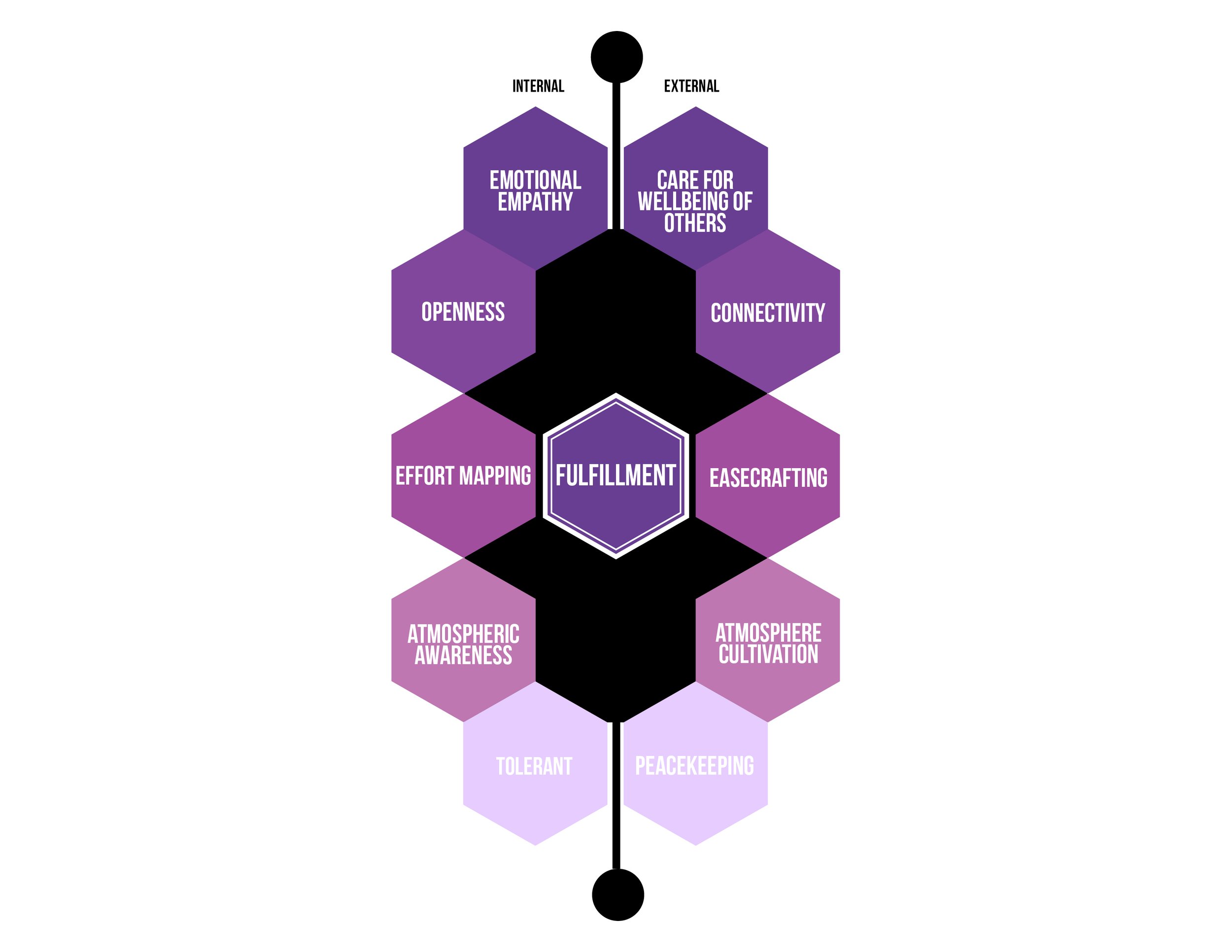
Within the Fulfillment system:
Atmospheric Awareness → senses the emotional environment
Emotional Response → engages the environment
Fulfillment → evaluates the internal experience of alignment
Atmospheric Awareness is the sensory gateway of Fulfillment—it determines how experiences are felt before they are even processed.
Expanded Strength of the Experiential Design: Atmosphere Cultivation
Your ability for Atmosphere Cultivation empowers you to intentionally shape the emotional tone of environments in a way that creates connection, comfort, and meaningful experience. This strength allows you to not only sense what a space feels like—but to actively influence what it becomes.
Atmosphere Cultivation is not passive—it is creative emotional formation.
At its core, this strength begins with awareness, but quickly moves into intention. You recognize the emotional state of a room, a conversation, or a group—and instead of simply responding, you begin asking:
What should this feel like?
This question defines the shift from awareness to cultivation.
You understand that environments are not fixed—they can be guided. Through your presence, tone, expression, and interaction, you begin to design the emotional experience of a space.
This may look like:
Creating warmth in a cold or disconnected environment
Bringing lightness into heaviness
Establishing calm in tension
Building energy where there is stagnation
You are not forcing emotion—you are inviting it.
Your strength expresses through subtle but intentional actions. You adjust how you speak, how you engage, how you respond, and even how you carry yourself. These shifts influence others in a way that feels natural, not imposed.
This is what makes it cultivation—not control.
As this develops, you begin to create consistent emotional environments. People experience you as someone who brings a certain tone with you—whether that’s peace, warmth, joy, or connection. Your presence becomes associated with a specific kind of experience.
This leads to something deeper:
You don’t just respond to environments—you set them.
Ultimately, your Atmosphere Cultivation creates spaces where people feel:
More at ease
More connected
More open
More themselves
It turns environments into experiences that are not only functional—but meaningful and fulfilling.
Key Skills That Pertain to Atmosphere Cultivation
Emotional Intentionality: Choosing the emotional tone you want to create.
Presence Shaping: Using your demeanor and energy to influence environments.
Tone Setting: Establishing the emotional direction of a space or interaction.
Creative Engagement: Using words, expression, and behavior to shape experience.
Relational Warmth: Creating environments where people feel welcomed and safe.
Energy Modulation: Increasing or decreasing emotional intensity appropriately.
Environmental Influence: Shifting group dynamics without force.
Consistency of Presence: Bringing a stable emotional tone across situations.
Experience Design: Thinking about how interactions feel, not just what happens.
Emotional Leadership: Guiding others through tone rather than instruction.
Five Levels of Competency in Atmosphere Cultivation
Level 1: Natural
What You Can Do:
You naturally influence how environments feel, often without realizing it. Your mood and presence affect others, but this may be inconsistent or unintentional.
Skills at This Level:
Affecting emotional tone unintentionally
Bringing energy or calm at times
Limited awareness of your influence
Inconsistent emotional impact
Example:
Your presence shifts the mood of a group, but you’re not always aware of how or why.
Type of Work:
Social environments, team settings, or relational spaces.
Level 2: Emerging
What You Can Do:
You begin to recognize your ability to influence atmosphere and start using it more intentionally.
Skills at This Level:
Awareness of emotional impact
Beginning to adjust tone intentionally
Trying to create positive environments
Learning what works and what doesn’t
Example:
You intentionally lighten a conversation or bring calm to a tense moment.
Type of Work:
Customer-facing roles, team collaboration, or relational environments.
Level 3: Proficient
What You Can Do:
You consistently shape environments in a positive and intentional way. Others experience you as someone who improves how situations feel.
Skills at This Level:
Intentional tone setting
Consistent emotional influence
Creating connection and comfort
Balancing different emotional dynamics
Example:
You create an environment where people feel at ease and engaged, even in challenging situations.
Type of Work:
Leadership, facilitation, hospitality, counseling, or people-centered roles.
Level 4: Advanced
What You Can Do:
You excel at shaping complex or high-stakes environments. You can guide group emotional dynamics with precision and consistency.
Skills at This Level:
Designing emotional tone for groups or events
Managing high-pressure emotional environments
Creating cohesion across diverse personalities
Sustaining positive atmosphere over time
Example:
You lead a group through a difficult situation while maintaining a sense of calm, connection, and forward movement.
Type of Work:
Leadership, mediation, counseling, event design, or culture-building roles.
Level 5: Mastery
What You Can Do:
Your Atmosphere Cultivation is highly refined. You consistently create environments that are emotionally impactful, meaningful, and life-giving. Your presence shapes culture.
Skills at This Level:
Creating emotionally transformative environments
Establishing lasting cultural tone
Mentoring others in emotional influence
Sustaining environments of trust, connection, and fulfillment
Example:
As a leader or creator, you build spaces where people feel deeply connected, valued, and inspired.
Type of Work:
Executive leadership, culture design, community building, counseling, or experiential leadership.
Summary of Atmosphere Cultivation Progression
Natural: Influences atmosphere unintentionally.
Emerging: Begins shaping environments intentionally.
Proficient: Consistently creates positive emotional experiences.
Advanced: Guides complex emotional environments.
Mastery: Shapes culture through emotional presence and design.
IMD Insight (Key Distinction)
Within the Fulfillment system:
Atmospheric Awareness → senses what is felt
Atmosphere Cultivation → shapes what is felt
Emotional Engagement → deepens the experience
Atmosphere Cultivation is the creative function of Fulfillment—it turns emotional awareness into intentional experience design.